
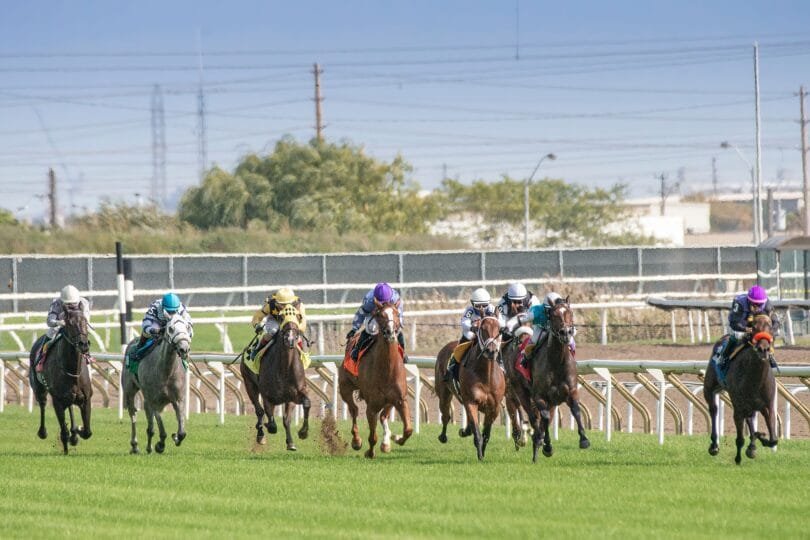

Each summer, Del Mar Thoroughbred Club becomes one of the focal points of American horse racing. The seaside venue attracts accomplished sprinters, respected trainers, and competitive fields, providing compelling racing throughout the meet.
Among the featured turf events, the Green Flash Handicap, which this year takes place on Saturday, August 22, has earned recognition for rewarding pure speed while demanding precise race execution over a unique course configuration.
For racing fans, understanding this event extends well beyond reading the final entries. The characteristics of the Del Mar turf course, the timing of the summer meet, and the profiles of horses that typically succeed all provide valuable context before race day.
Examining these factors helps position the Green Flash Handicap within the broader Del Mar program and explains why it remains one of the meet’s most anticipated turf sprints.
Why the Green Flash Handicap Stands Out
The Green Flash Handicap is traditionally contested over five furlongs on Del Mar’s Jimmy Durante Turf Course, making it one of the fastest races of the summer meeting. Unlike longer turf events where pacing strategies evolve throughout the race, this sprint places immediate emphasis on acceleration, tactical positioning, and efficient use of every stride from the opening break.
Speed alone, however, rarely tells the complete story. The relatively short distance places added importance on post position, the ability to secure a favorable trip, and familiarity with Del Mar’s distinctive turf layout.
Horses that have previously handled the course often receive additional attention because proven comfort over this configuration can become an important piece of the overall evaluation.
When reviewing Green Flash Handicap picks, experienced bettors generally compare several race-specific details rather than relying on recent finishing positions alone. A more complete evaluation often includes:
- Previous performances over five furlongs on turf,
- Results at Del Mar or similar California turf courses,
- Running style compared with the projected early pace,
- Recent workout patterns leading into the race,
- Trainer and jockey success in California turf sprints.
Considering these elements together creates a more balanced understanding of the field and highlights why the Green Flash Handicap regularly produces competitive racing despite its shorter distance.
Reading Del Mar’s Summer Form
Summer racing at Del Mar differs from many other meets as numerous horses arrive after competing at Santa Anita or other California circuits earlier in the season. Rather than viewing each performance in isolation, many analysts examine how a horse’s campaign has developed across multiple starts before reaching Del Mar. Form cycles often reveal whether a runner is maintaining consistency, improving with each outing, or returning after a carefully planned break.
Surface experience also deserves close attention. While many horses transition successfully between dirt and turf, specialists frequently perform well in short turf sprints. Previous performances over firm California turf can provide valuable insight into how comfortably a horse handles the quicker early tempo commonly seen during the Del Mar summer meet.
Many handicappers also organize recent performances into several practical categories before comparing the field.
- Most recent Beyer Speed Figures and overall consistency,
- Finishing position relative to field strength,
- Recovery time between starts,
- Performance after similar layoffs,
- Trainer patterns during the Del Mar summer meeting.
Reviewing each category together creates a more complete picture than focusing on one statistic. Consistency across several indicators often provides stronger context than a single standout performance when evaluating an established summer turf sprint.
Pace and Position Matter
The Green Flash Handicap unfolds in only five furlongs, leaving little opportunity for horses to recover from a slow beginning. That reality makes early positioning one of the first elements analysts examine after entries are released.
A sharp break can be an advantage in the Green Flash Handicap, though projected pace and race shape often determine which running style is best suited to a particular renewal.
At the same time, pace should never be viewed in isolation. When several front runners appear in the same field, the early fractions can become considerably quicker than usual. In those situations, tactical runners capable of tracking the leaders before accelerating through the final furlong frequently become interesting horses to evaluate.
Comparing each entrant’s preferred running style against the projected pace creates a much clearer picture than only looking at raw speed figures.
Trainer and Jockey Patterns
Successful Del Mar connections often demonstrate consistent preparation methods throughout the summer meet. Reviewing those patterns helps place each entrant into a broader context instead of evaluating every race independently. Several aspects deserve attention before race day.
Stable Preparation
Morning workouts frequently reveal how trainers are preparing horses for a short turf sprint. A steady series of timed drills over several weeks often indicates a carefully managed campaign rather than a rushed return to competition.
Rider Familiarity
Jockeys who regularly compete at Del Mar develop experience with the Jimmy Durante Turf Course and become familiar with its unique rhythm. Their understanding of positioning entering the stretch can become an important consideration when fields are closely matched.
Team Success
Trainer and jockey partnerships that repeatedly compete together throughout the California season often establish effective communication and focus on consistent race planning. Looking at their recent Del Mar statistics provides additional context when comparing contenders.
Following Del Mar Throughout the Summer
The Green Flash Handicap represents more than a single afternoon of racing. It reflects many of the patterns that define the Del Mar summer meet, where established turf specialists compete alongside emerging sprinters throughout one of the country’s busiest racing seasons. Following the races leading up to the Green Flash often provides valuable context that can’t be captured by name recognition alone.
Weekly stakes races frequently reveal trends that continue across the meet. Horses exiting similar turf sprints, trainers whose runners steadily improve during the season, and jockeys developing strong partnerships all contribute useful information before the Green Flash Handicap arrives. Observing these developments over several weeks allows racing fans to recognize broader patterns instead of evaluating each race as an isolated event.
Official workouts, post position draws, weather updates, and overnight changes also become increasingly important during race week. Reviewing these developments alongside each horse’s recent performances creates a fuller understanding of the field and helps explain why experienced followers continue updating their evaluations until the final entries and conditions are confirmed.
Del Mar’s Signature Turf Sprint
The Green Flash Handicap continues to occupy a distinctive place within Del Mar’s 2026 summer racing schedule. Its five-furlong distance rewards careful preparation, tactical speed, and proven ability over the Jimmy Durante Turf Course while consistently attracting accomplished turf sprinters from across the region.
Following the race within the context of the entire Del Mar meet provides a deeper appreciation of how horses, trainers, and jockeys progress throughout the summer.
For racing enthusiasts, the most valuable preparation comes from combining several types of information rather than focusing on a single statistic. Course experience, recent form, projected pace, trainer patterns, workout reports, and race week developments all contribute meaningful context.
Together, these elements provide a more complete perspective on one of Del Mar’s signature summer events and make following the Green Flash Handicap an engaging part of the 2026 racing calendar.
