
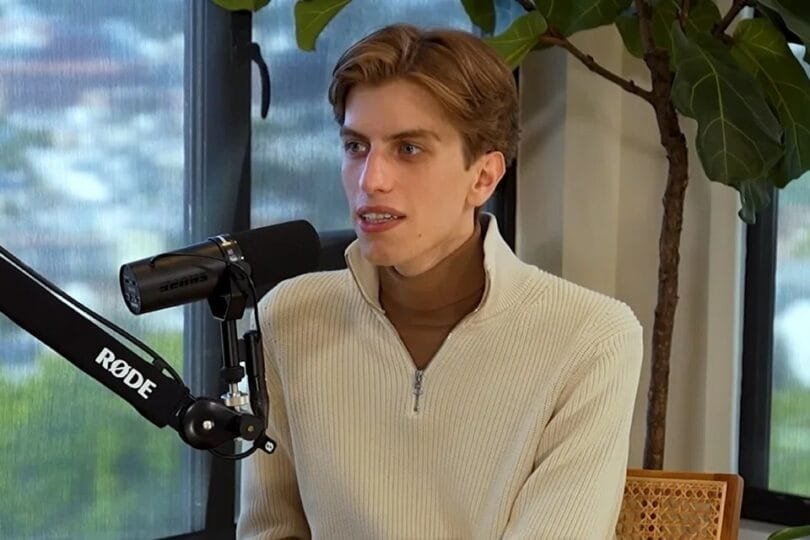

Situational Awareness managed more than $30B at its peak and borrowed tens of billions more, with Bank of America, Citi, Goldman Sachs and JPMorgan among its major counterparties.
After leveraged AI bets moved sharply against the fund, it was forced to sell most of its stock portfolio to Citadel at a discount.
Situational Awareness claiming the #1 spot with that $35B loss is crazy. $35bn gone, from a fund actually called Situational Awareness! Aschenbrenner just set a record Wall Street took decades to build. His wreck is bigger than Morgan Stanley’s $13.5bn or JPMorgan’s $12.5bn. Archegos vaporized $11.5bn back in 2021 and only ranks fourth. LTCM almost sank the whole system at $8.5bn yet barely makes the top ten.
I’m still baffled how Situational Awareness didn’t take profits. Even taking 25% profits to protect itself from liquidation. I guess that’s the problem with Gen Z, they lack the experience to pull back. Even in the best days Buffett knows to stack cash to protect against a sudden fall. Biggest trading loss is having absolutely no situational awareness…
‘Guaranteed 20% monthly’ is a promise no legitimate fund can make. Run the other way when you hear a fun promising you guaranteed returns.
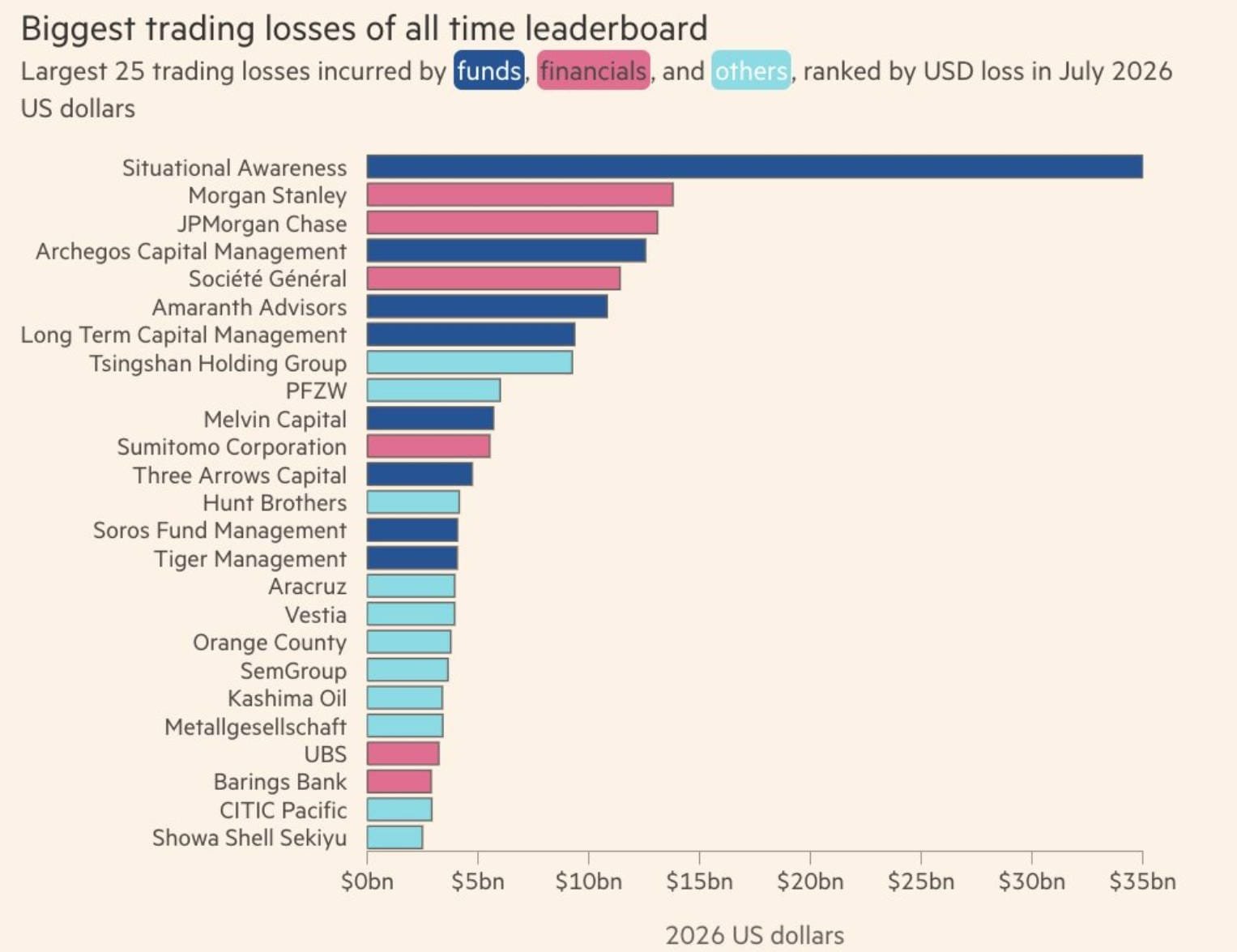
Nothing cures overconfidence quite like seeing how much money very smart people have managed to lose.
This is what Leopold Aschenbrenner’s Situational Awareness positions looked like as of the end of Q2 BEFORE THE HEDGE FUND COLLAPSED
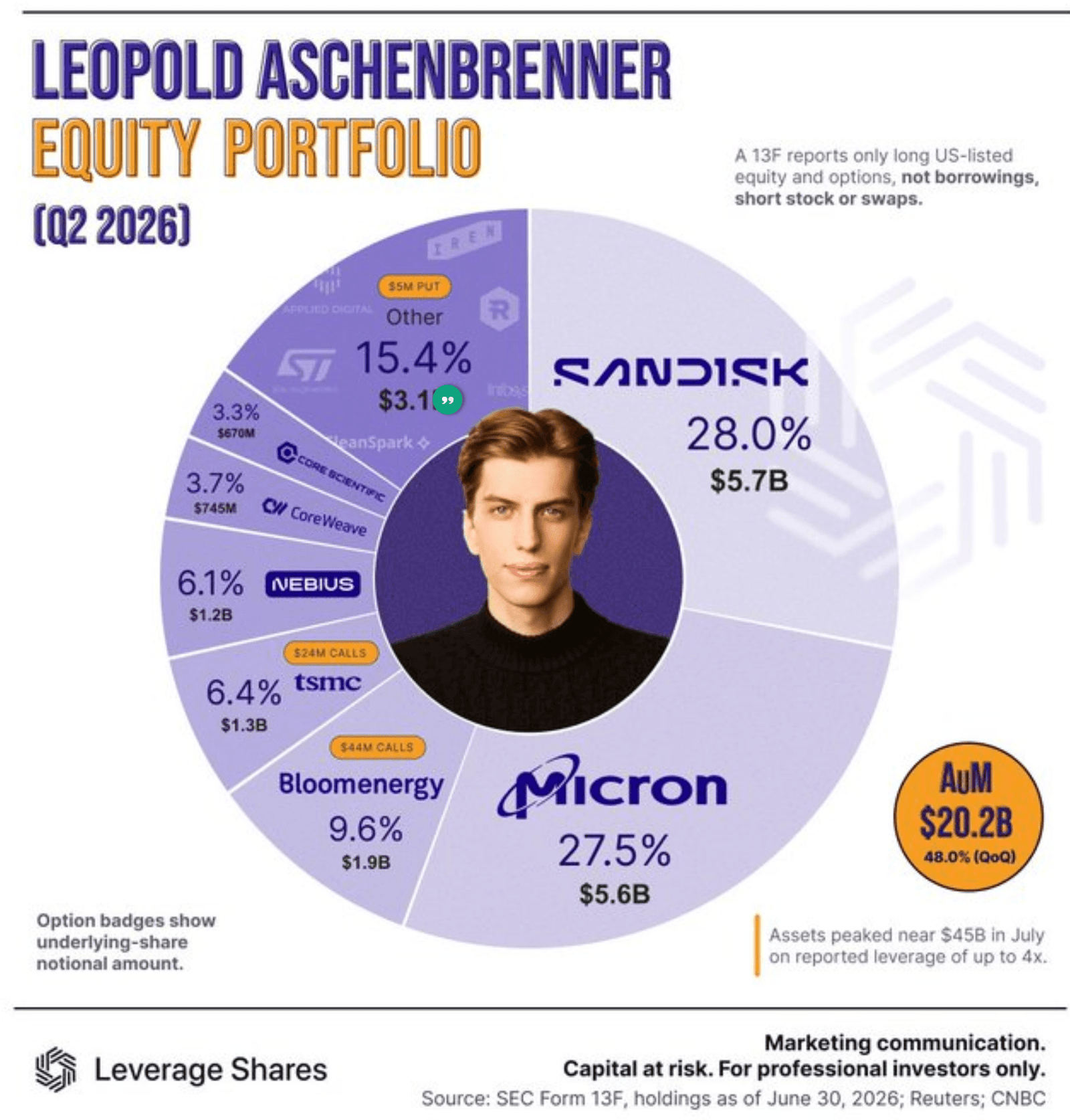
SanDisk $SNDK: 28.0%, $5.7B
Micron $MU: 27.5%, $5.6B
Bloom Energy $BE: 9.6%, $1.9B (includes $44M in calls)
TSMC $TSM: 6.4%, $1.3B (includes $24M in calls)
Nebius $NBIS: 6.1%, $1.2B
CoreWeave $CRWV: 3.7%, $745M
Core Scientific $CORZ: 3.3%, $670M
Other (STMicroelectronics, IREN, Applied Digital, Infosys, includes a $5M put): 15.4%, $3.1B
– STMicroelectronics $STM 7,802,700 shares, $0.6B
– Applied Digital $APLD 15,384,616 shares, $0.5B
– Riot Platforms $RIOT 17,100,000 shares, $0.5B
– Sharonai 5,396,127 shares, $0.5B
– IREN $IREN 9,474,099 shares, $0.4B
– CleanSpark $CLSK 12,276,139 shares, $0.2B
– Keel: 26,451,393 shares, $0.2B
– Solaris $SEI 1,129,621 shares, $0.1B
– Whitefiber: 1,757,600 shares, $0.1B
– Bitdeer Technologies $BTDR 3,439,450 shares, $0.05B
– T1 Energy $TE 4,900,000 shares, $0.05B
– Hive Digital $HIVE 9,133,726 shares, $0.03B
– Babcock & Wilcox $BW 2,027,451 shares, $0.03B
– ProPetro $PUMP 1,960,382 shares, $0.03B
– Vishay $VSH 375,000 shares, $0.02B
– Cerebras $CBRS 10,000 shares, $0.002B
Call options:
– Bloom Energy calls: 145,800 contracts, $0.04B
– Taiwan Semiconductor calls: 50,000 contracts, $0.02B
Put options:
– Infosys puts: 500,000 contracts, $0.005B
Situational Blindness.. to the risks of unhedged leverage on highly correlated assets
55.5% of the portfolio in just Sandisk and Micron is an extremely concentrated bet on memory specifically, not the broader ai trade people usually associate with these names. “Before the hedge fund collapsed” is doing a lot of work in that framing, worth understanding what actually caused the collapse before drawing conclusions from the holdings themselves. concentration like this amplifies both gains and losses significantly.
One limitation worth stating whenever these land: a 13F reports long positions only. Short stock is never on it and is never netted against a long, so a filing can show a book that looks entirely directional while the manager runs a second side you cannot see. Options show up, which is why a put-heavy filing is legible and a short-stock book is not. The document is a long-side inventory, not a portfolio.
The Leopold – Citadel deal came together in less than 1 day. Ken Griffin’s Citadel Securities said they were able to sell ~80% of the “risk” they bought from Leopold Aschenbrenner’s Situational Awareness just a few days after!
