
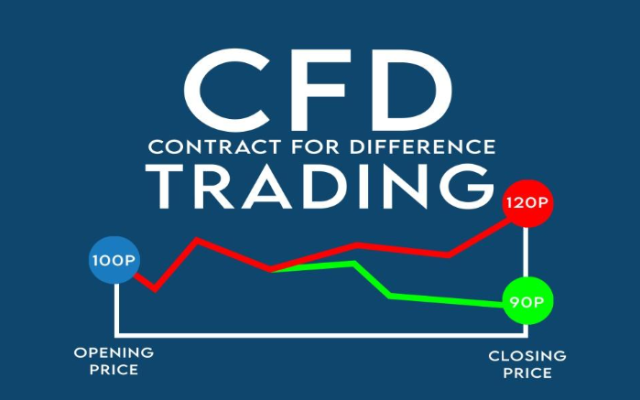

Opening a CFD trade and seeing a small loss straight away can be confusing. The market may barely have moved, so it is not always clear why the position is already showing a negative result.
The reason is often the difference between the buy price and the sell price. These are the two prices used when opening and closing a position.
Understanding this difference is a useful part of learning how CFD trading works. It also makes it easier to understand what you see on the screen after opening a trade.
Why are there two different prices?
When looking at a CFD market, traders normally see a price for buying and a price for selling.
These two prices are usually close, but they are not exactly the same.
If someone opens a buy position, the trade is opened using the buy price. If that position is closed, the sell price is used.
Because there is a difference between the two prices, a new position can show a small loss immediately after it is opened.
This does not mean that the market has already moved sharply in the wrong direction. The negative number can simply reflect the difference between the price used to open the position and the price currently available for closing it.
For beginners, understanding this makes CFD trading much easier to follow.
What needs to happen before the trade shows a profit?
After a buy position is opened, the market needs to move enough for the price available for selling to move beyond the opening price.
For a sell position, the idea works in the opposite direction.
This means that a small loss at the beginning of a trade does not tell the trader what will happen next.
The market may start moving in the expected direction, move the other way or remain close to the opening level.
Instead of focusing only on the first profit or loss figure, it is better to look at the opening price and the current prices shown for the market.
This helps traders understand what has actually changed since the trade was opened.
Can the difference between the prices change?
Yes. The difference between the buy and sell prices can change.
It can vary between different markets and at different times. Market activity can also affect the prices shown.
For example, prices can move faster around major economic announcements or during periods of strong activity. At other times, the market may be quieter.
For this reason, it is useful to check the buy and sell prices before opening a position rather than assuming the difference between them will always be the same.
Someone following CFD markets through XTrade, for example, can check both prices while looking at a market before deciding whether to open a position.
Do not react only to the first number
A new trader may see a negative result and immediately think that something has gone wrong.
Before reacting, it helps to check what has actually happened to the market price.
If the market has barely moved, the initial negative figure may mainly reflect the difference between the buying and selling prices.
If the market has moved, the change in price will also affect the result of the position.
Looking at this information together gives much more context than looking only at one negative number on the screen.
As traders become more familiar with how CFDs work in practice, this becomes easier to understand.
Check both prices before opening a CFD trade
Before opening a position, it is useful to look at both the buy price and the sell price.
This gives the trader a better idea of the difference between the two prices before the trade begins.
It also helps explain why a new CFD position may not start at zero even if the market has barely moved.
Seeing a small loss immediately after opening a CFD trade can be surprising at first. But once the role of the buy and sell prices is clear, the reason becomes much easier to understand.
