










16th April 2025 The financial markets are navigating through one of the most hostile environments...

The late Benjamin Franklin is remembered for once famously saying, “There are two things you can be sure of in life – death and taxes!” When an opportunity to make money and not pay any tax on the profit comes along, it’s fair to say that most people would take a second glance.
Financial Spread Betting falls nicely into this category.
16th April 2025 The financial markets are navigating through one of the most hostile environments...










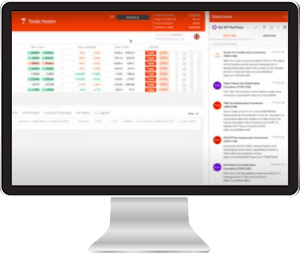
Trade with a Reputable and Regulated Provider!
Trade Nation offer tight and fixed spreads.
Trading is Risky. 73.6% of retail investor accounts lose money when trading spread bets and CFDs.

12th March 2025 The recent market correction has been both swift and brutal, with leading indexes...











Trade Responsibly! 81% of CFD Clients Lose Money. Trade Nation is a financial spread betting and...

Pepperstone Limited was established in 2010 when it established an operation in Australia...
Financial spread betting is leveraged trading. It provides traders and investors the opportunity to trade the financial markets without ever taking ownership of the underlying asset. Spread bets are geared trades which give you greater buying power and the potential for greater returns. It leverages the value of your money regardless of the financial market that you are interested in, whether shares, commodities, indices, or even currencies, and its flexibility allows you access to all these markets from just one account. Spread trading is a form of derivative trading which means you don't actually own any of the shares that you are trading but are simply trading on the direction of the share price i.e. whether it will go up or down.
The spread betting provider will quote a price range or 'spread' and you can forecast whether a stock, index or other financial instrument will rise or fall. Prices quoted can move very rapidly as they reflect actual market conditions. The way it works is that you place a bet on the price and which way you think it is going to go - you can profit equally easily from the price going up or down.
If you believe a specific stock index (like the FTSE 100), currency pair or commodity will rise or fall, you can bet so much a point and either keep the end date open or set a time limit, which is normally a day or three months forward to close the trade. For every point the trade moves in your favour, you win multiples of your stake and for every point it moves against you lose multiples of your stake. If you bet £20 a point and the index dropped 300 points, your gross gain would be £6,000. We will go into this in more detail later.
Your profit or loss is the difference between the price at which you enter and the price at which you close the trade. The more the market moves in your direction you have predicted, the greater your profit. Conversely, when the market moves against you, the more you lose. The danger is that the loss may exceed your deposit margin.
The fees are in the spread - so watch the spread. There is no CGT, stamp duty, explicit trading commissions. Trading on margin allows traders and investors to open larger positions, which makes it viable to target relatively small price movements. But bear in mind you may still need the money to back it up!! You can place stops/limits on your losses (at a cost) to prevent you from losing your shirt. And don't forget, importantly it's easy to place down bets which means that you can use spread trading to sell short so as to profit from any correctly predicted price declines.
This is important: As you do not physically own the product, but trade solely on price movements, you can profit from falling markets as well as rising markets. This is a handy guide to financial spread betting - how it works, have fun and hopefully make a few quid. Our guide covers an impressive amount of ground, starting out with tutorials and learning about spread betting right down to working out exposure and the psychology of making a trade. Learn the mechanics and advantages of spread betting, including short selling and trading on margin. Plus how to develop a trading plan and the fundamentals of risk management.








If you're curious about spread betting or want to dive deeper into this financial product, our comprehensive spread betting guide is here to help! Whether you're a complete beginner or looking to sharpen your skills, you'll find everything you need to know about spread trading in one place.
However, it's important to approach spread betting with caution. These products are complex and come with a high risk of losing money quickly due to leverage. In fact, between 65% and 85% of retail investors lose money when trading. Be sure to fully understand the risks involved and never trade with money you can't afford to lose!
For valuable insights and expert tips, visit Financial-Spread-Betting.com - your go-to resource for spread betting and day trading knowledge.